
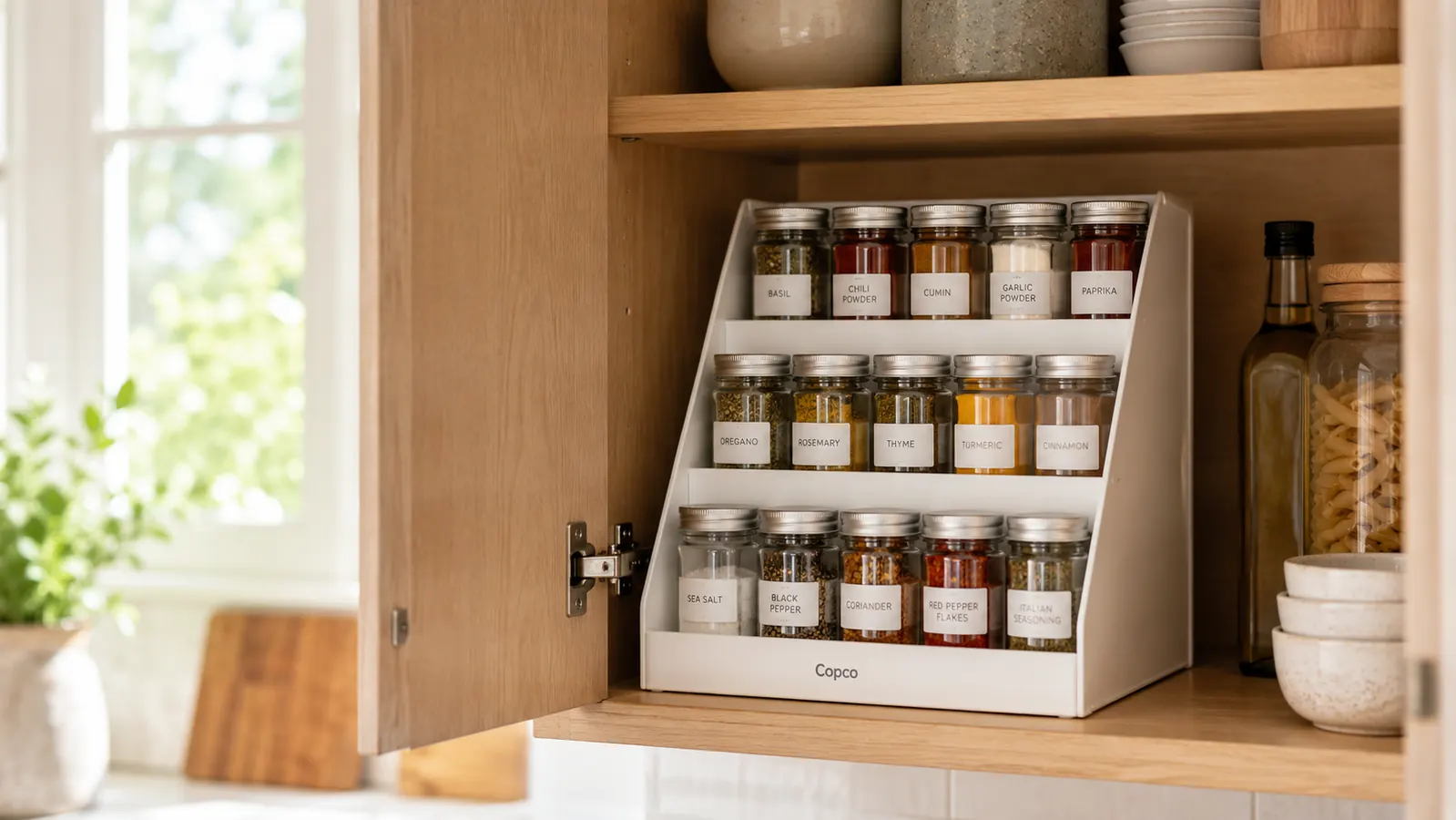
I want to tell you something nobody in the 60,000-plus reviews on Amazon bothered to say: the Copco 3-Tier Cabinet Spice Rack is genuinely useful, but it has three specific limitations that will drive you absolutely crazy if nobody warns you first. I bought mine eight months ago after getting tired of shoving jars to the back of a deep pantry cabinet and forgetting they existed. I have used it almost every single day since then. And I have knocked it off the shelf twice. So let me tell you what the cheerful five-star crowd left out.
This is the honest version. Not the 'life-changing pantry upgrade' version. The version where I tell you about the tier depth problem, which jars will not fit where you expect them to, why the rack slides on certain cabinet surfaces, and the one thing I genuinely wish Copco had done differently with the design. If you are still with me after all of that and you decide it is right for your kitchen, the link below will take you straight to the current Amazon listing.
The Quick Verdict
A genuinely useful, dirt-cheap pantry tool that earns its keep on the right shelf, but demands specific jar sizes and a non-slick cabinet surface to perform without frustration.
Amazon Check Today's Price →Still hunting for anything in the back of your cabinet? This is your fix.
The Copco 3-Tier Spice Rack costs less than a pizza delivery. It is not perfect, but for the right pantry setup it is the easiest win in home organization. Check today's price on Amazon and see if it is the size you need.
Amazon Check Today's Price on Amazon →How I Have Actually Been Using This Thing
My kitchen has a single deep pantry cabinet that runs about 14 inches from front to back. Before the Copco rack, I had two rows of spice jars sitting flat on the shelf. The ones in the front got used. The ones in the back silently expired. I found three jars of cumin in there once. Three. I am one person.
I put the Copco rack on the middle shelf of that cabinet, centered, and loaded up the bottom tier first with the tallest jars I had: standard McCormick jars in the red caps, about 4.5 inches tall. Those went on the bottom tier. Shorter jars, the kind that come with store-brand dried oregano or small plastic containers of onion powder, went on the middle and top tiers. It took maybe ten minutes to set up. There is nothing to assemble; you take it out of the box, put it on the shelf, and start loading jars.
For the first two months it was genuinely great. I could see every jar at a glance. I stopped buying duplicate garlic powder. But then I reorganized the shelf above it and bumped the rack, which is when I discovered the first real problem. It slid forward on my laminate cabinet shelf surface without any resistance whatsoever. Gravity does not care about a five-star average rating.
The Tier Depth Problem Nobody Talks About
Here is the thing the photos on Amazon do not show clearly: the tiers are shallow. Each step is roughly 3.5 inches from front to back. That is enough to hold one row of jars per tier, and just barely. If your spice jars have any depth to them, they will hang slightly off the back edge of each tier. This is not a structural failure; the rack is stable enough when placed properly. But it does mean you cannot double-stack or arrange jars in two rows per tier the way some buyers seem to expect.
The three-tier layout only works smoothly if you are using it with one consistent jar type per tier. Mix in a few wider jars, like those short wide Trader Joe's spice jars or anything in a squat round container, and suddenly the math gets weird. The squat wide jar sits fine on the bottom tier but eats so much of the tier's depth that the row above it gets crowded. I spent an embarrassing amount of time rearranging jars on a Tuesday afternoon to figure this out.
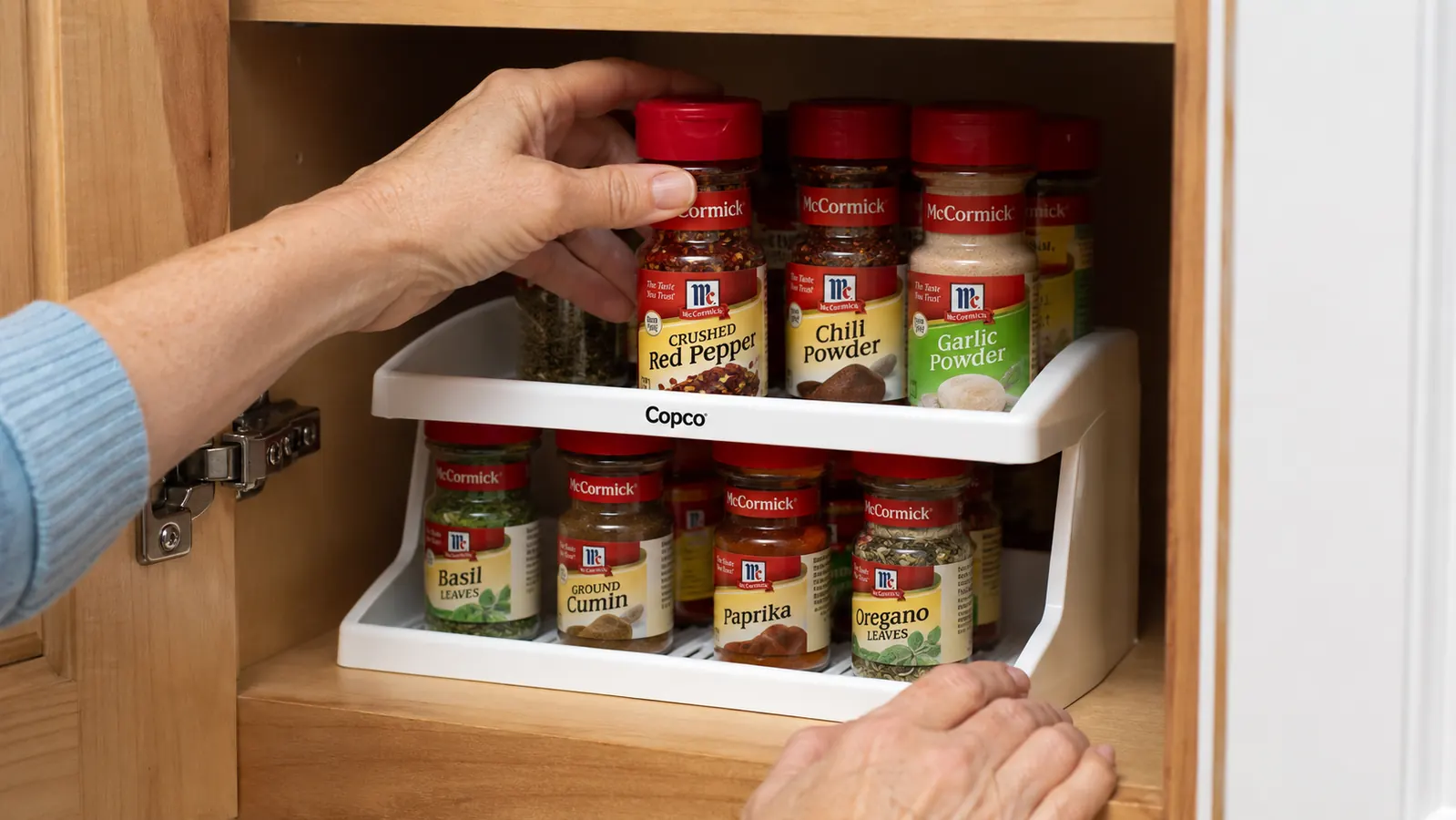
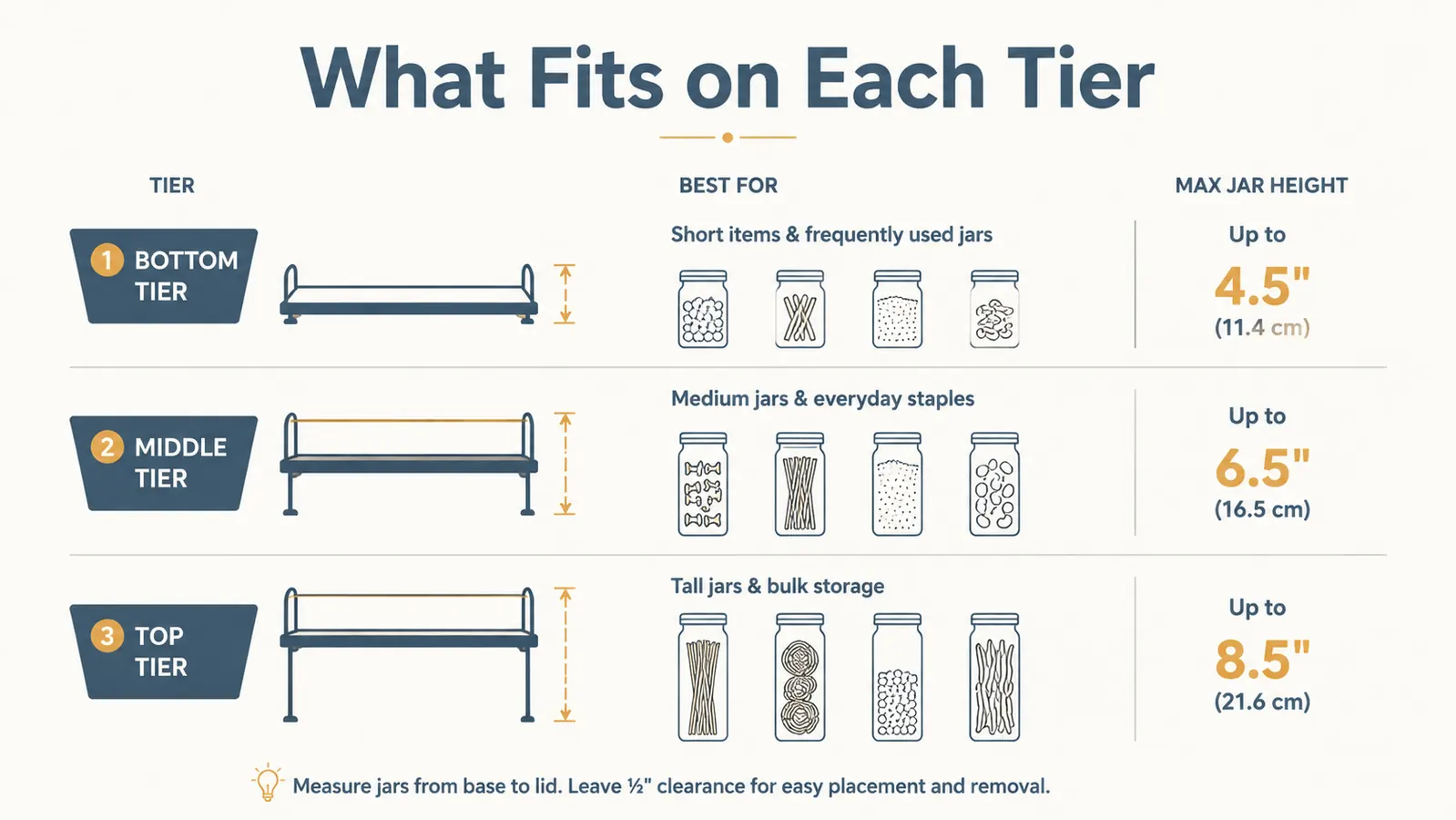
The sweet spot for this rack is standard rectangular spice jars, specifically the narrow ones. McCormick, Simply Organic, Badia, and most store-brand versions all fit cleanly on every tier. The taller jars (anything over about 5 inches) need to go on the bottom tier where there is enough head clearance between the bottom of the rack and your cabinet shelf above it. I measured the bottom tier clearance at roughly 6.5 inches, which handles most standard jars. The middle and top tiers have progressively less clearance, around 5 inches and 4 inches respectively, so taller jars physically will not fit there.
The Stability Issue on Smooth Surfaces
The Copco rack has four small rubber feet on the base. On a textured shelf, like a rough wood pantry shelf or a shelf liner with some grip to it, those feet do a reasonable job of keeping the rack in place. On a smooth laminate or melamine cabinet shelf, which is what most modern kitchens have, those feet barely help at all. The rack can slide a few inches if you pull a jar from the bottom tier at an angle, or if another family member shoves something onto the shelf next to it with any force.
The fix is simple: a strip of non-slip shelf liner under the rack. I cut a piece from a roll of mesh liner I already had, tucked it under the base, and the problem disappeared. It took me two months to figure that out because I kept assuming the rack would eventually stay put on its own. It will not. If you have smooth cabinet shelves, budget about thirty seconds to cut a liner strip before you load the rack with jars. Consider it part of the setup rather than a workaround.
Once I put a strip of non-slip liner underneath, the rack stopped moving entirely. That one fix changed my whole experience with this thing.
What Nobody Tells You About Cleaning It
Spice cabinet shelves get dusty and they get powdery residue from open jars. Every few weeks you need to wipe everything down. With the Copco rack, that means pulling all the jars off, wiping the tiers, and reloading. The rack itself wipes clean in under a minute because the surface is smooth molded plastic with no grooves or crevices to trap anything. That is a genuine design win.
What is less convenient is that the rack is one solid piece. You cannot fold it flat or take it apart to clean under it. You have to lift the whole rack, wipe the cabinet shelf beneath it, set the rack back, and reload the jars. If you do a full pantry clean twice a year this is no big deal. If you are someone who wipes shelves weekly, plan for an extra five minutes every time. It is not a dealbreaker, but it is worth knowing before you tuck it deep in a cabinet where access is already awkward.
The One Design Choice I Genuinely Wish Were Different
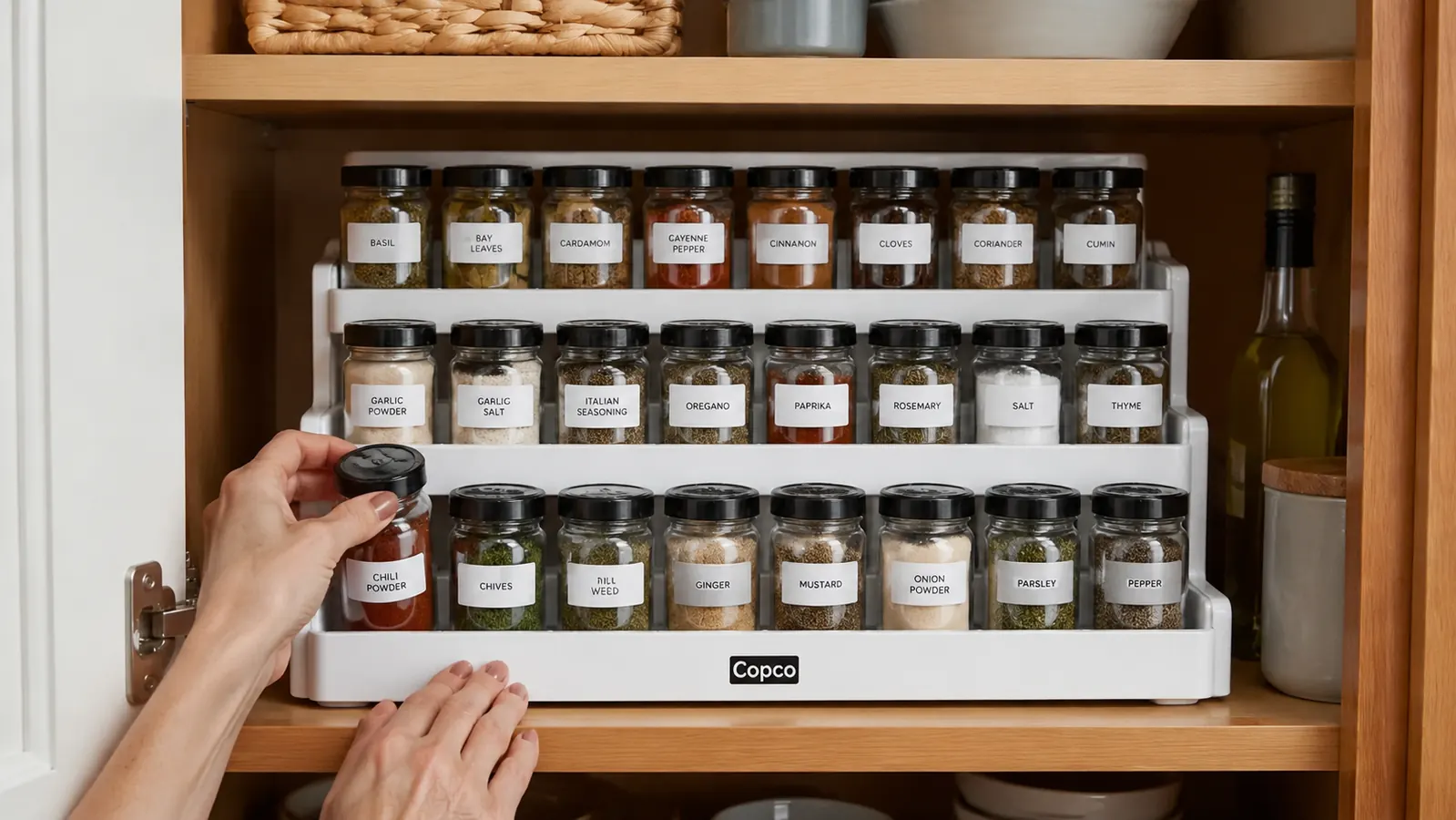
The Copco rack is 10 inches wide. That is the standard size, and it fits most cabinet shelves with room to spare. But it is also only 10 inches wide, meaning it holds roughly three to four jars per tier depending on jar diameter. For a cabinet that is 24 inches wide, one rack still leaves you with 14 inches of unstructured shelf space next to it. You either buy two racks and line them up, or you accept that the rack only solves half the cabinet.
I bought a second one. I now have two Copco racks sitting side by side on the middle shelf of my pantry cabinet, and between the two of them I can see and reach every spice I own without reaching past anything else. The second rack costs the same as the first one, which at this price point is not a hardship. But if you are planning to buy one and expect it to fix a wide cabinet in one go, recalibrate your expectations before checkout.
The Things It Does Really Well
After eight months I want to be clear: I still use both racks daily and I have not considered returning them. The visibility upgrade is real. When I open that cabinet now, every jar faces forward and every label is readable without picking anything up. That sounds like a small thing until you have spent years squinting at the back of a cumin jar trying to read it at an angle in bad cabinet light.
The price point means I did not overthink the purchase. At this cost, even a decent product that only lasts two or three years is worth it. The build quality is solid enough that I expect these to last considerably longer than that. The plastic is rigid without being brittle. I have dropped one on a tile floor and it did not crack. The step heights are consistent, and the whole unit sits level on a flat shelf without any wobble or flex.
It is also portable in a way a built-in shelf insert is not. I can pull the rack out, carry it to the counter, pick my jars, and put it back. During the holidays when I am cooking from scratch every other day, I sometimes just lift the whole rack out and set it on the counter next to the stove. That kind of casual usability is easy to take for granted but it is one of the things that makes this work in a real kitchen rather than just a styled Instagram pantry.
What I Liked
- Visibility goes from zero to total in ten minutes of setup
- Wipes completely clean with no grooves to trap powder or residue
- Sturdy enough to drop on tile without cracking
- Portable: pull the whole rack out to the counter when you need it
- Works beautifully with standard narrow rectangular spice jars
- No assembly, no tools, no instructions to read
Where It Falls Short
- Slides on smooth laminate shelves without a non-slip liner underneath
- Tier depth is only about 3.5 inches, so one row of jars per tier, maximum
- Tall jars (over about 5 inches) only fit on the bottom tier
- One rack is only 10 inches wide, not enough to cover a standard wide cabinet
- Non-stackable one-piece design means lifting the whole unit to clean beneath it
- Wider squat jars (Trader Joe's style) interrupt the tier spacing
Who This Is For
This rack is exactly right for you if your pantry cabinet has a smooth, flat shelf surface (after you add a liner strip), your spice jars are mostly the standard narrow rectangular kind, and you want to spend as close to nothing as possible to solve the buried-jars problem. It is also a good fit for renters who cannot install built-in shelf systems: no drilling, no adhesive, no risk to the cabinet.
It works well in a cabinet that is around 12 to 16 inches deep. Deeper cabinets may still leave a dead zone behind the rack; shallower cabinets may not leave enough front-to-back space for the rack plus some working room to pull jars. If you have a 24-inch-wide cabinet and want full coverage, two racks side by side is the move. Budget for that from the start and you will not be disappointed.
Who Should Skip It
If your spice collection leans heavily on non-standard jar sizes, whether that is small round tins, tall oil bottles, or wide-mouth mason jars, this rack will not give you a clean organized look because nothing will sit evenly across the tiers. It is designed around one jar profile and it punishes you mildly if your collection does not match.
If you want to organize a pantry shelf that also holds canned goods, baking supplies, and the random assortment of things that do not have a home, the Copco rack is not a whole-shelf solution. It is a spice-specific tool. For a broader pantry overhaul, pair it with a matching drawer organizer or a set of clear bins on adjacent shelves so the whole space gets the same treatment. There is a fuller comparison of how this rack stacks up against spice drawer inserts over at the comparison guide if you want to think through which approach fits your setup better.
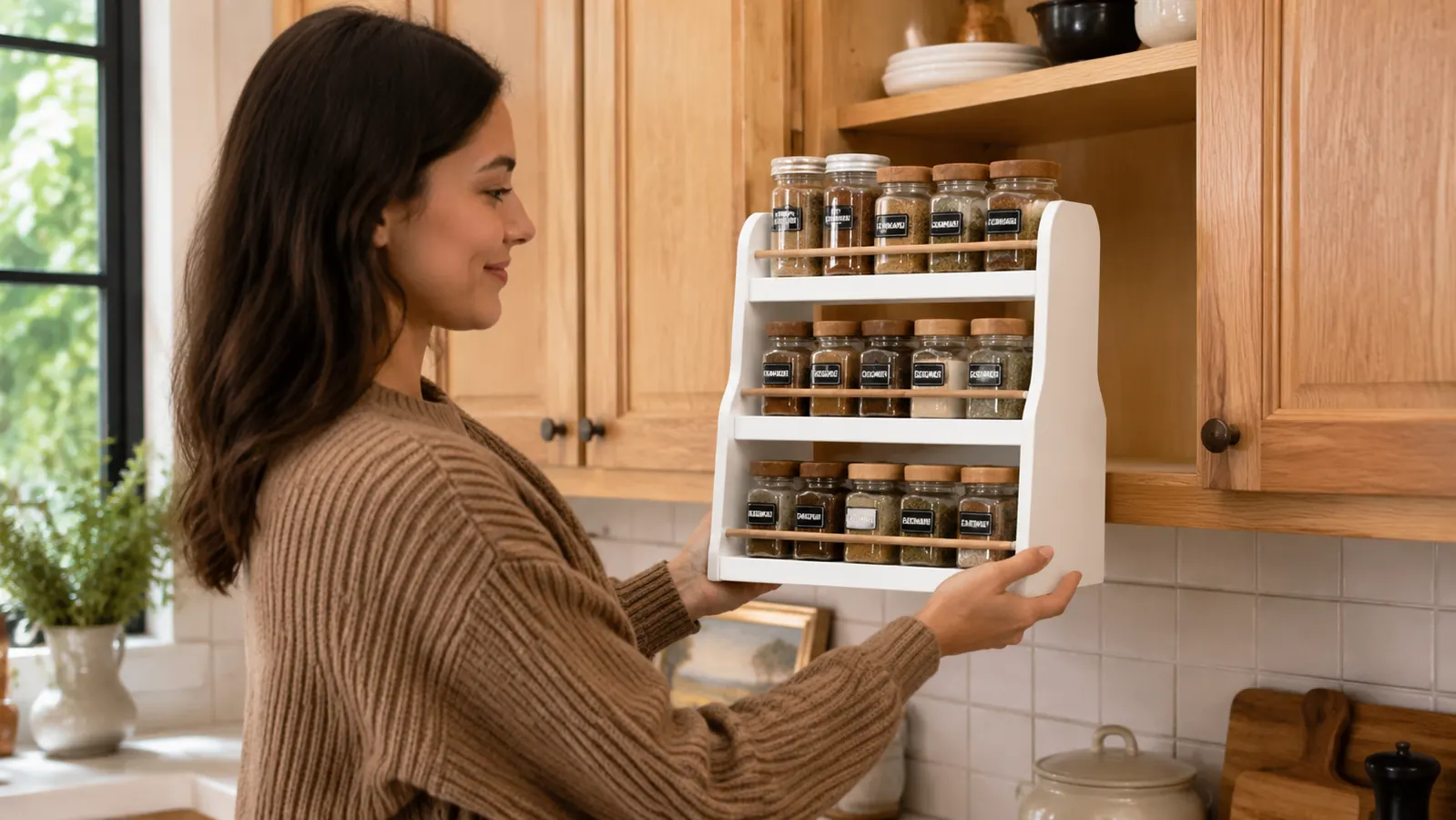
The short version: if the only thing standing between you and an organized spice shelf is a small, inexpensive, no-tools riser that works with standard jars, buy the Copco. Just add the liner strip, plan for two if your cabinet is wider than about 12 inches, and do not try to squeeze your giant Italian seasoning jug onto the top tier. You can read more about one homeowner's real before-and-after experience with this same rack in the pantry story piece if you want a more personal take before you decide.
Ready to stop losing jars to the back of your cabinet?
The Copco 3-Tier Spice Rack is the lowest-effort, lowest-cost pantry fix I have found. With a liner strip underneath and the right jar sizes, it runs quietly in the background of your kitchen and earns its shelf space every single day. Check today's price on Amazon.
Amazon Check Today's Price on Amazon →