
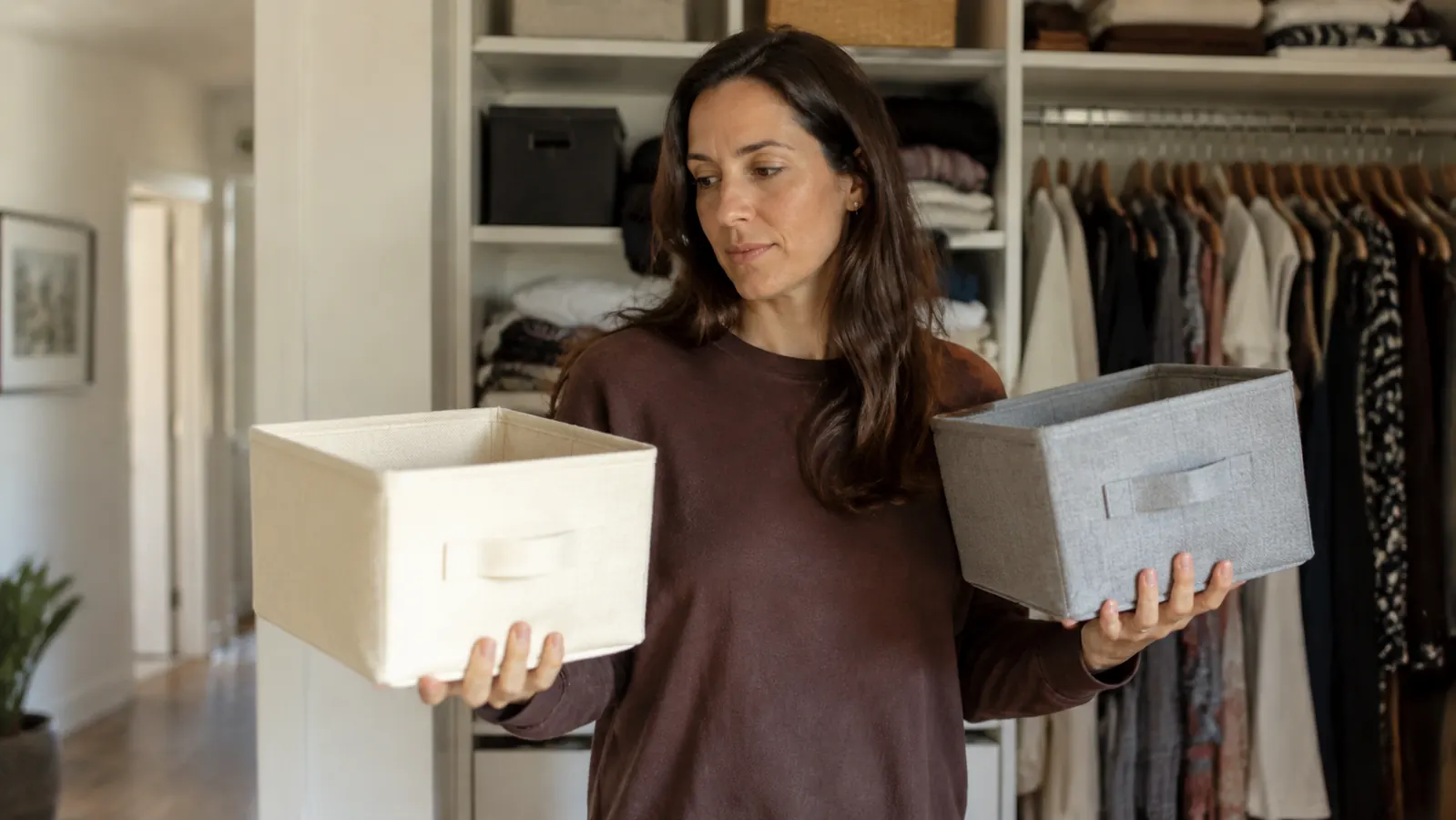
I have been organizing closets, pantries, and junk drawers for myself and for friends for about eight years. I am not a professional organizer, but I am the person in my group who gets a text that says "come help me, I cannot look at my closet anymore." So I have bought a lot of storage bins. The cheap ones from dollar stores that go limp inside six months. The pretty woven ones that look great in photos and smell like a warehouse. The overpriced acrylic sets that crack when the temperature drops. When the Homsorout closet bin six-pack started showing up in my Amazon recommendations, I ordered it partly out of curiosity and partly because a few people I trust had mentioned it. What I want to give you here is not a cheerleader review. I want to tell you what the listing glosses over, where these bins genuinely deliver, and the two situations where you should skip them entirely.
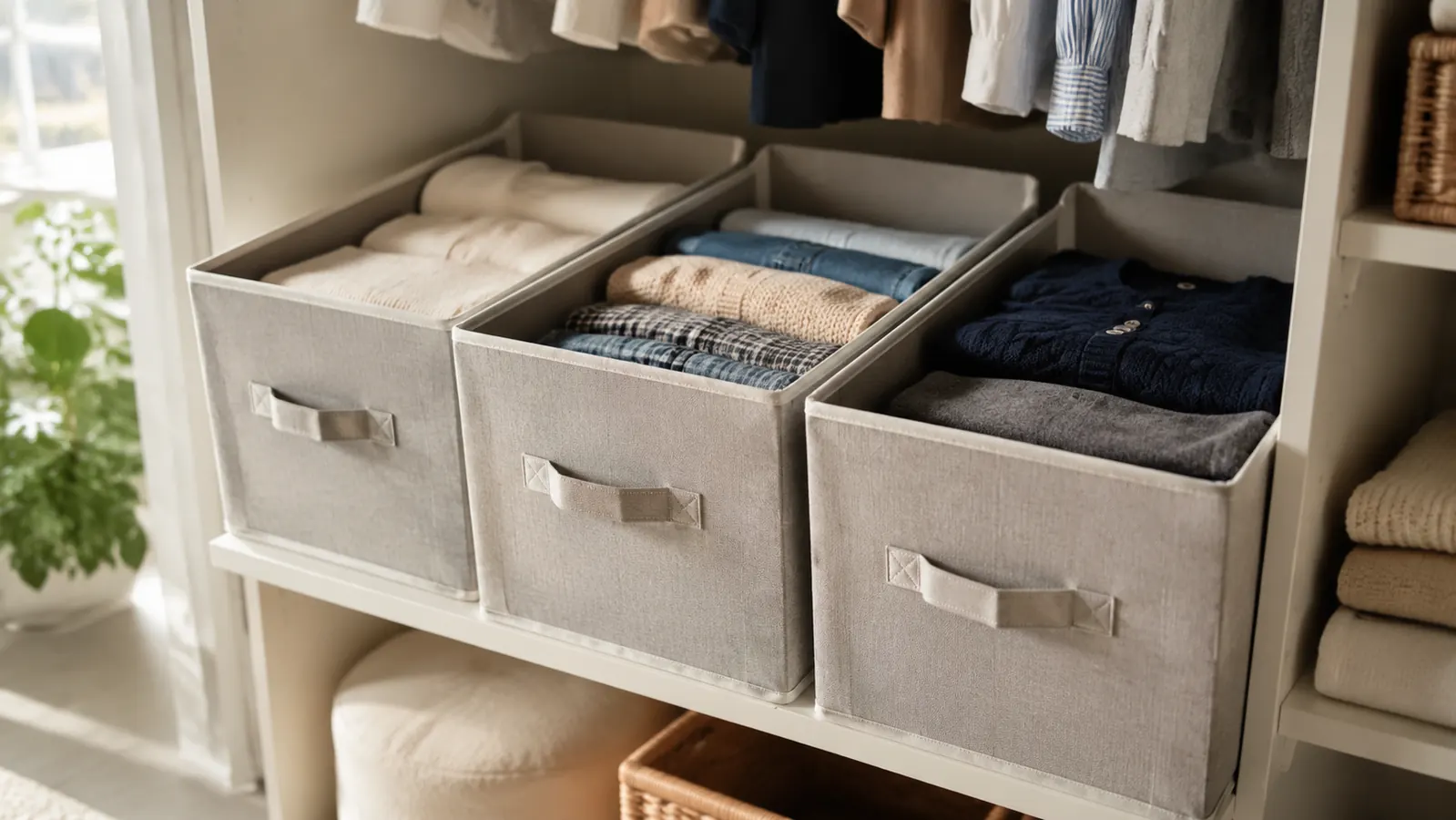
The Homsorout set gives you six large fabric organizer bins, each with a front window label slot and two fabric-wrapped handles. The product page shows beautifully staged closets. What it does not show you is what happens the first time you pull a fully loaded bin off a high shelf with one hand, or what the structure looks like after the bin has been slid in and out of a tight shelf gap two hundred times. That is what we are going to cover.
The Quick Verdict
Genuinely solid closet bins with a real sizing caveat: measure your shelves before ordering, because these run bigger than most people expect, and that is either a feature or a problem depending on your setup.
Amazon Check Today's Price →Your closet chaos has a budget-friendly fix. Here is where to grab it.
The Homsorout six-pack is in stock on Amazon right now. Check the current price before it changes, and read the sizing note in this review before you add to cart.
Amazon Check Today's Price on Amazon →The Sizing Thing Nobody Mentions
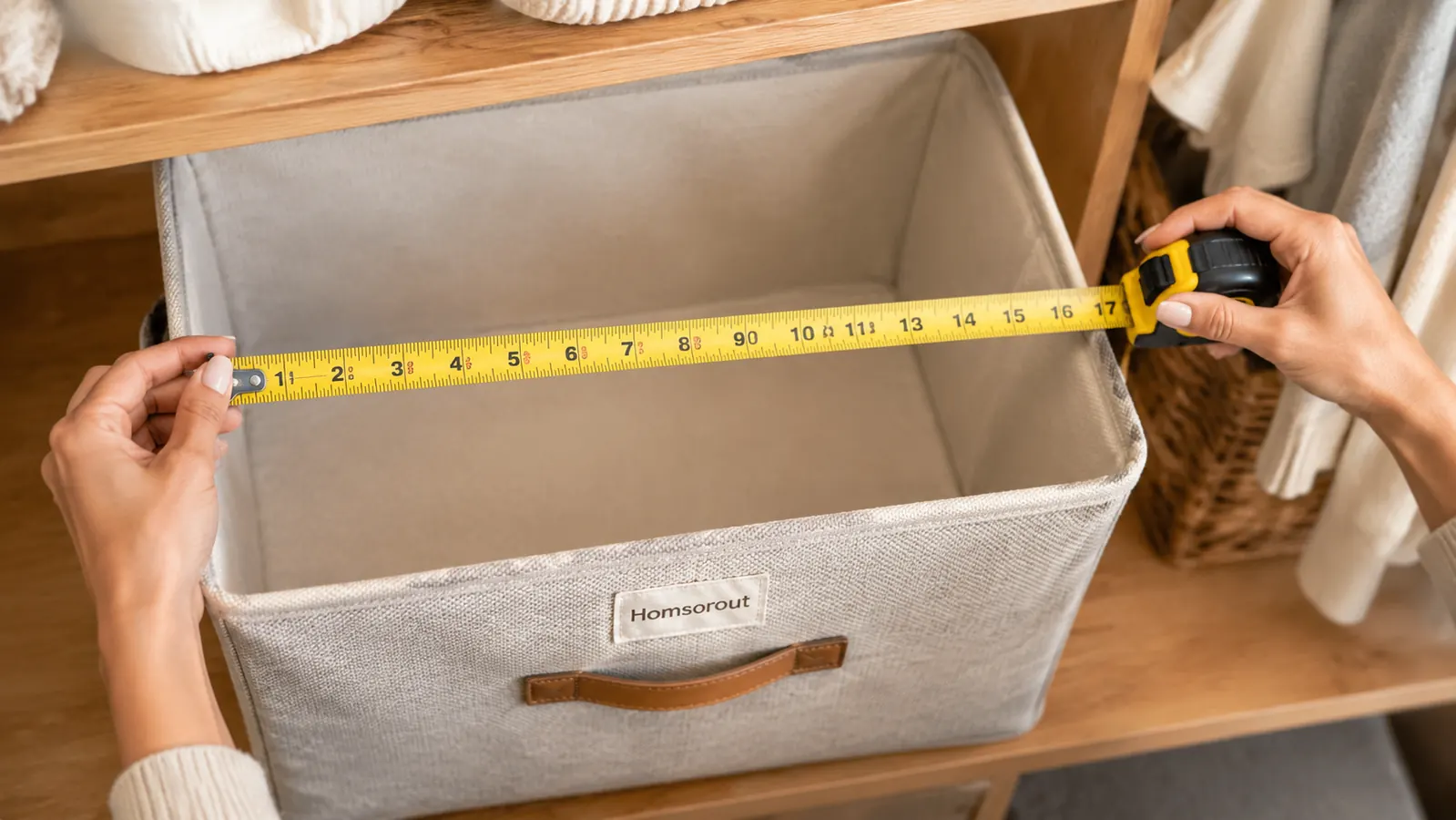
Here is the single biggest piece of information missing from most Homsorout reviews: these bins are genuinely large. Each one measures approximately 14.5 inches wide, 9.5 inches deep, and 9 inches tall when fully expanded and loaded. That is a good-sized bin. If your closet shelves are the standard 12-inch depth you find in most builder-grade reach-in closets, a fully loaded Homsorout bin will stick out about two and a half inches past the front edge of the shelf. For most people that is fine, because the handle is right there and you just grab it. But if you have a closet with a sliding door that closes flush to the shelf face, you will have a problem. The bin will prevent the door from closing.
The width is also something to verify. On a typical closet rod section that measures 30 inches between the wall and a side panel, you can fit two bins side by side with about an inch to spare. On a 24-inch section, two bins will be a very tight squeeze and one might not sit flat. I recommend pulling up a tape measure before you order. That two minutes will save you a return shipment.
None of this is a flaw in the product. The bins are exactly what they say they are. The frustration I see in some one-star reviews is really a mismatch between shelf dimensions and bin size, and that mismatch is avoidable if someone just says it plainly. So: measure first. If your shelves are 14 inches deep or more, these will fit beautifully. If you are working with 12-inch shelves and a sliding door, reconsider.
Handle Durability: The Honest Report
The handles are the first thing people wonder about, and rightly so. A fabric storage bin with weak handles is just a fabric box you cannot actually move safely. On the Homsorout bins, the handles are fabric-wrapped rope, stitched to a reinforced panel on each side of the bin. The stitching is visible and tight on the units I received. I have been using my set for about three months, pulling bins on and off shelves multiple times a week, and not one stitch has pulled or loosened.
That said, there is a right way and a wrong way to carry these when loaded. The bins are not structured boxes. When you pick one up by a single handle with a full load of heavy sweaters inside, the bin body will bend slightly at the middle because the fabric sides are not rigid. It will not tear, but it will flex. If you are carrying the bin any distance or tilting it to fit through a narrow doorway, use both handles. That distributes the load evenly and the bin holds its shape. I loaded one bin with about 12 pounds of folded jeans and carried it across the room using both handles without any drama. One handle with that much weight started to let the bin sag noticeably. Not a deal-breaker, just something to know.
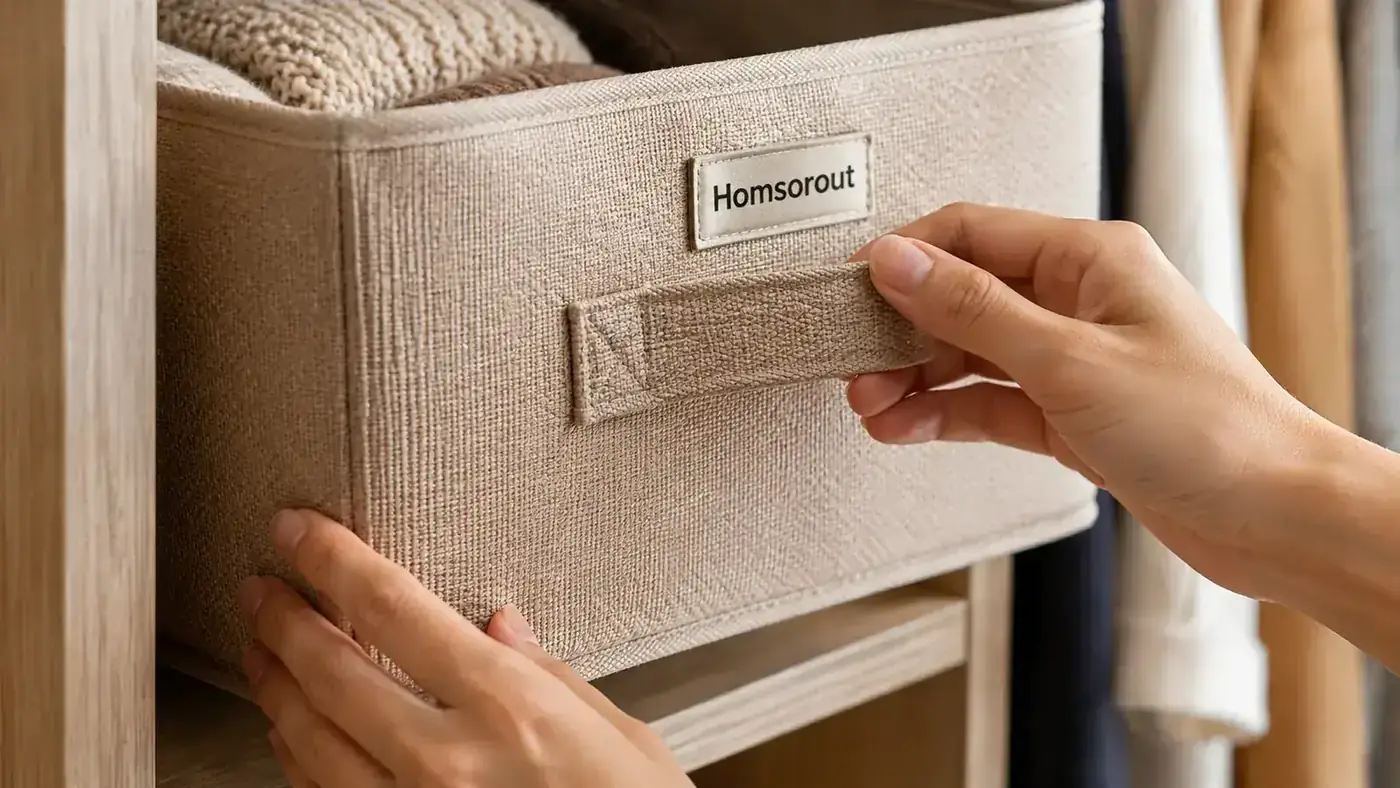
Not every bin needs to be pretty. It needs to come off the shelf without dumping your sweaters on the floor. These pass that test.
The Fabric Quality: What It Actually Feels Like
The material is a woven polyester fabric bonded over a cardboard frame. When you first unbox the bins, they need a few minutes to open up fully. They ship compressed flat and the cardboard frame takes a little encouragement to pop into a true rectangular shape. Do not panic the first time you open the box. Just fold the sides out, push the base flat, and let the bin stand for a few minutes. They will settle into shape.
The fabric exterior is woven tightly enough that it does not snag on closet shelf edges. I have wire shelving in one section of my closet and a wood-veneer shelf in another. The Homsorout bins slide easily on both surfaces without any fabric pulling or fraying at the base. The interior is a smooth liner fabric that does not catch on folded knits or delicate items. I store silk scarves and lightweight blouses in one bin and they come out without snags.
One thing the listing does not make obvious: the bins are not washable in a conventional sense. If one gets dusty, you can wipe the exterior with a damp cloth and it comes clean. But do not put it in the washing machine. The cardboard frame will not survive a wash cycle, and the fabric will shrink unevenly. I found this out from a reader who was disappointed after trying to freshen hers in a front-loader. Spot cleaning only.
The Label Window: More Useful Than I Expected
I am the kind of person who labels everything, so the front label window on each Homsorout bin was something I noticed immediately. It is a small clear plastic sleeve sewn into the front face of the bin, sized to fit a standard index card or a printed label. The included paper labels are fine as a starting point, but I replaced mine with printed cardstock labels inside clear plastic card sleeves. They look much sharper and they do not yellow over time the way the included paper labels can.
The window itself is positioned at about eye level when the bins are on a mid-height shelf, which is a thoughtful design choice. When the bins are on a high shelf, you will see the top of the window more than the face, so the label is harder to read from below. For high-shelf bins, I use a label that is readable from a steeper angle, written in larger letters on the bottom half of the card. Small adaptation, works well.
What No One Tells You About Buying Six at Once
The six-pack format is the right call for most people, and here is why: closet organization only works when an entire section is consistent. If you buy two bins to try them out and then decide you like them, the second set you order three months later will almost certainly be a slightly different production run. The color may be fractionally different. The fabric texture may feel slightly different. It is not dramatic, but you will notice when they are sitting side by side on the same shelf. Ordering the full six-pack up front means they all come from the same batch.
Six bins is also the right quantity for a standard reach-in bedroom closet with two shelving sections. I have three bins on my upper shelf and three on the lower, and the closet looks intentional rather than patchwork. If you have a larger walk-in, you may need to order two six-packs, and in that case, try to order them in the same transaction so they ship from the same batch.
One more thing: the bins arrive flat in a single box that is surprisingly compact. Do not assume the box is missing half the order because it looks small. They are all in there, compressed. Give them 15 minutes to expand after unboxing and they will be full-sized.
What I Liked
- Handle stitching holds up under real weekly use without pulling or loosening
- Fabric exterior does not snag on wire or wood shelf edges
- Label window is a genuinely useful detail, especially with cardstock labels
- Six bins in one batch means consistent color and fabric across your whole closet
- Interior liner is smooth enough for delicate folded items like silk and knits
- The bins ship flat and expand fully in minutes with no assembly
Where It Falls Short
- Larger than most people expect: measure your shelves before ordering or the bins may stick out too far
- Not machine washable: the cardboard frame will not survive a wash cycle
- Fabric sides flex under heavy loads if carried by a single handle, use both hands for anything over 8 pounds
- High-shelf label visibility is limited from below, worth adapting your labeling style
- Cardboard frame can soften slightly in humid climates like a basement laundry room
What Happens in a Humid Closet
This is the caveat nobody puts in their review: the cardboard frame that gives these bins their structure does not love persistent humidity. In a dry bedroom closet, they hold their shape indefinitely. In a basement storage area where the air is consistently damp, or in a bathroom cabinet where steam is frequent, the cardboard can soften over time and the bin will start to lean slightly at the sides. I have heard from people who use them in laundry rooms with complaints about this. For a bedroom closet or a walk-in, you will never see this issue. For a basement or a bathroom under the sink, consider a fully plastic bin instead.
How They Compare to What I Used Before
Before Homsorout, I had been using a brand of canvas bins I found at a big-box store, priced at about six dollars each. The canvas was thicker but the handles were just two loops of thin ribbon stitched to the top edge of the fabric, no reinforcement behind them. After about a year of regular use, those ribbon handles started to pull away from the fabric on two of the five bins I had. That is where the comparison falls apart. The Homsorout handles are stitched through a reinforced panel, not just the outer fabric layer. I cannot say they will last forever because I have not had mine long enough to make that claim honestly. But the construction is noticeably more robust than the cheaper alternatives I have used.
The other difference is the label window. My old bins had no label at all, which meant I was either memorizing what was in each bin by position or digging through all of them to find a specific item. The label window sounds like a small thing until you are standing in your closet at 7 a.m. trying to find a specific scarf before work. It is not a small thing.
Who This Is For
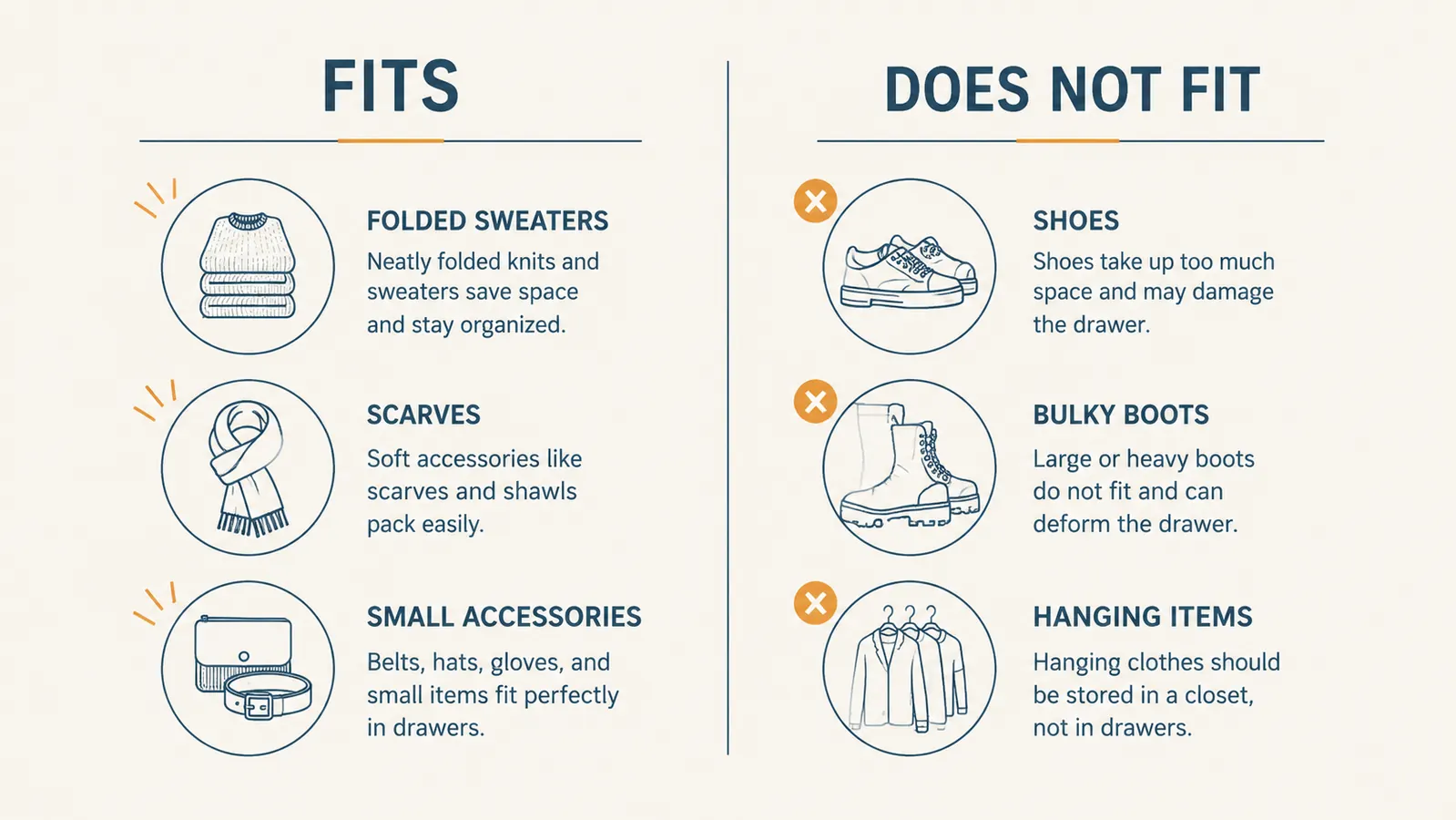
These bins are built for the person with a standard bedroom closet, a hall linen closet, or a pantry shelf who wants their folded items corralled into dedicated zones. They are ideal if you have a partner or kids who have a hard time putting things back neatly, because the bins create a clear visual container with a visible label. You do not have to teach anyone a complicated system. You just point at the bin. They work well for sweaters, scarves, t-shirts, pajamas, workout clothes, extra linens, craft supplies, and anything else that gets folded and stacked. If the thing you want to store is folded and goes on a shelf, these bins will probably work for you.
They also work well as a gift for someone who is trying to get their closet under control but has not committed to a full organizational overhaul. A six-pack of Homsorout bins is a complete, immediate fix for one closet section. That is a meaningful gift for the right person.
Who Should Skip It
Skip these if your closet shelves are 12 inches deep and you have a sliding door that closes flush to the shelf face. The bins will prevent the door from closing properly, and that will bother you every single day. Also skip them if you need to store shoes, boots, or anything that cannot be folded flat. The bins are designed for fabric items and small accessories, not for rigid or very bulky objects. And if your storage area is a basement, a bathroom cabinet, or anywhere that gets genuinely humid on a regular basis, look at a hard plastic bin with a lid instead. The cardboard frame in these bins is not built for that environment.
Finally, if you only need one or two bins, the price per unit on the six-pack may feel like more than you want to commit. In that case, check if a smaller pack size is available in the current listing. The consistency argument I made earlier still stands, but your budget is your budget.
Measured your shelves and they clear 14 inches? These are worth every dollar.
The Homsorout six-pack is one of the more consistently reviewed closet bin sets on Amazon for good reason. Check current availability and today's price before you decide.
Amazon Check Today's Price on Amazon →